

A bracelet of Welsh Aristocracy
Sometimes, in the world of antique jewellery, you get lucky. And sometimes, you get impossibly lucky — as in this case.
As a jewellery history enthusiast, I’ve often found myself staring at a ring or a locket, wondering about the hands that once wore it, the stories it witnessed. You can decode hallmarks, pin down dates and makers — but the person who treasured the piece? That usually remains a mystery.
That’s why I’m drawn to mourning jewellery. These intimate objects, created to commemorate the dead, often bear names, dates — sometimes even locks of hair from those who have passed. They invite you into a detective story where the clues are engraved in gold and woven in human hair.
But even mourning jewellery has its limitations. Mourning rings, for instance, were frequently given to multiple funeral guests. So while you might learn the name of the deceased, the identity of the mourner — the one who actually wore the piece — typically remains unknown.
Not this time.
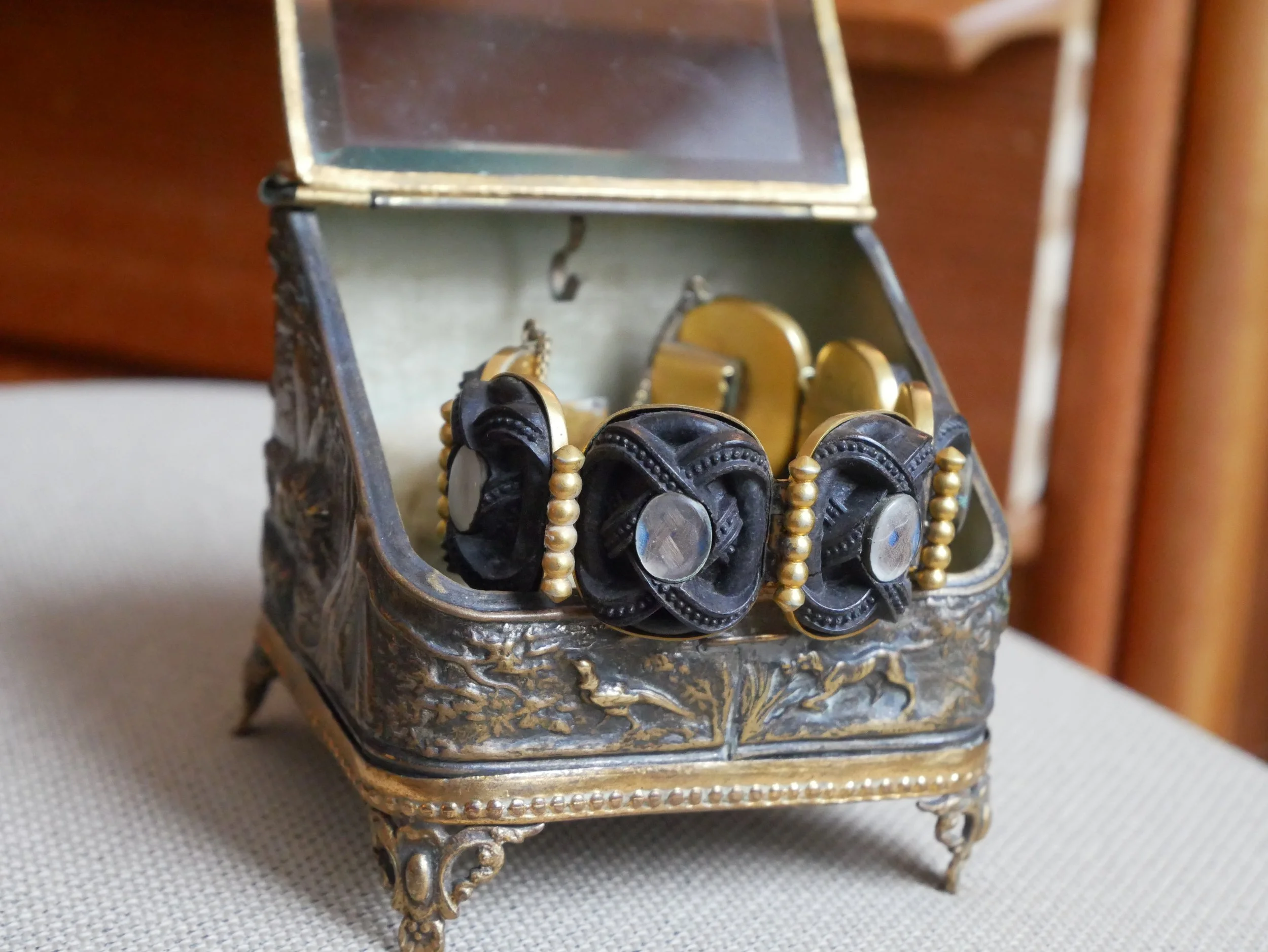
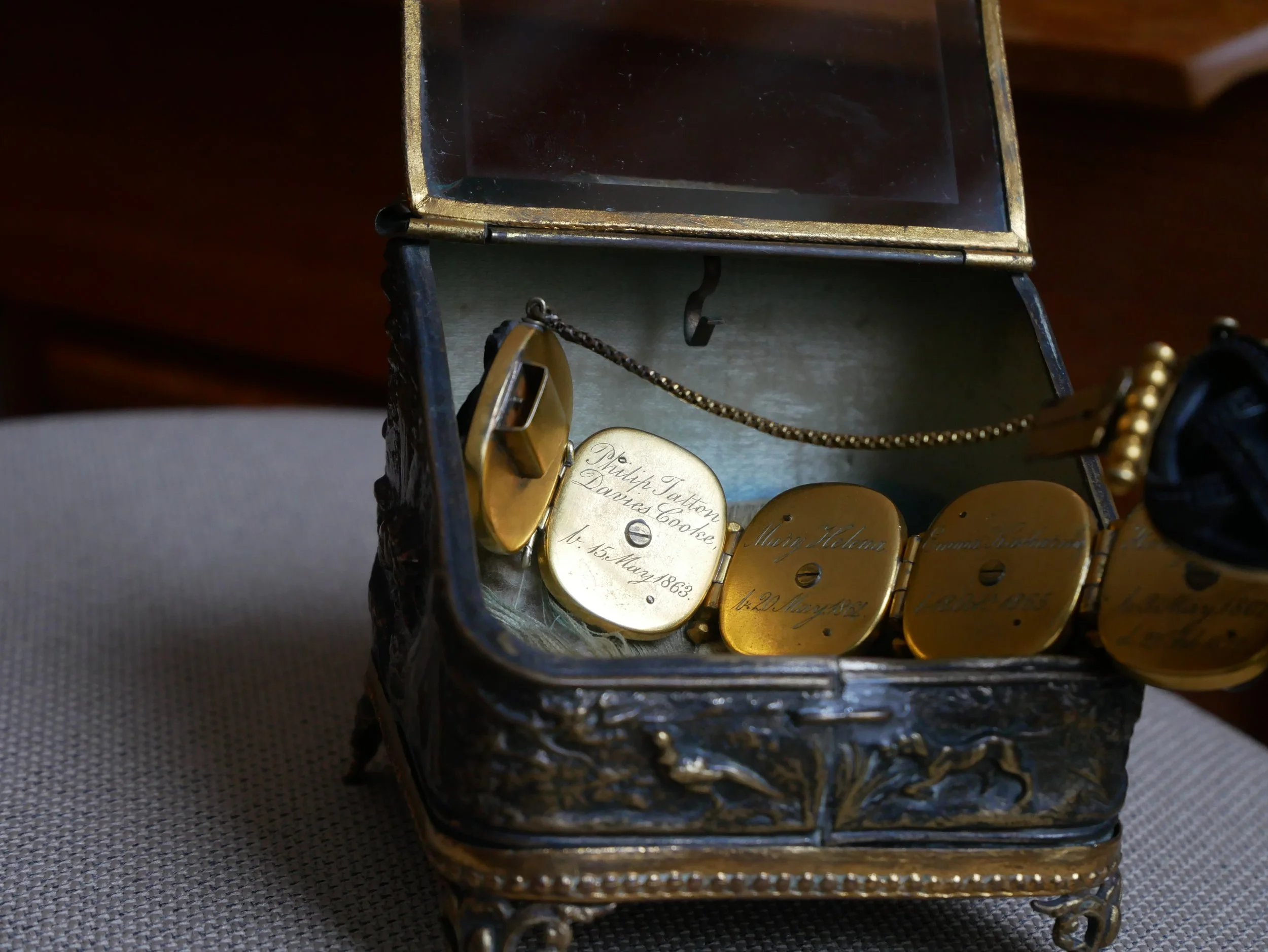
This beautiful bracelet is an original Victorian piece with five hair compartments, each displaying locks of mostly blonde hair, arranged with the meticulous care that characterised 19th-century hairwork. On the back of each wooden compartment, full names and birth dates are engraved:
• Philip Tatton Davies Cooke, born 15 May 1863
• Mary Helena, born 20 May 1864
• Emma Katharine, born 18 October 1865
• Henry George, born 3 May 1867 — died at just five years old
• Mildred Emily, born 1 December 1868
The dates, clustered within a few short years, told me immediately: these were siblings. And the double-barrelled surname — Davies Cooke — was distinctive enough to search. Within hours, I had fallen down a rabbit hole that would connect a simple Victorian bracelet to one of Wales’s most ancient families.
The five siblings whose hair lies preserved in my bracelet were the children of Emma Julia Sykes, born in 1837 in Sledmere, East Riding of Yorkshire — daughter of Sir Tatton Sykes, 4th Baronet. When she married Philip Bryan Davies-Cooke, two distinguished bloodlines converged.
Philip Bryan’s family tree reads like a page from Debrett’s. His father, Philip Davies-Cooke (1793–1853), was the first of his line to inherit both the Owston estate in Yorkshire and Gwysaney in Wales — properties that came together through his mother’s side of the family.
That mother was Frances Puleston (1765–1818) — and here I stumbled upon another discovery. While researching the family, I found that her portrait, painted by George Romney, had recently been auctioned by the Metropolitan Museum of Art to benefit its acquisition fund. The estimate? 250,000 to 350,000 US dollars. The grandmother of Emma Julia’s husband, captured by one of the eighteenth century’s most celebrated portraitists.
Philip Bryan’s mother added another layer of aristocratic connection: Lady Helena Caroline King (1800–1871), daughter of George King, 3rd Earl of Kingston. Her own mother, Lady Helena Moore, was the daughter of the 2nd Viscount Mount Cashell, later Earl of Mount Cashell — Irish nobility with roots in Tipperary.
So when Emma Julia Sykes, daughter of a baronet, married into this family, she was joining a web of earls, viscounts, and centuries-old estates stretching from Yorkshire to Wales to Ireland.
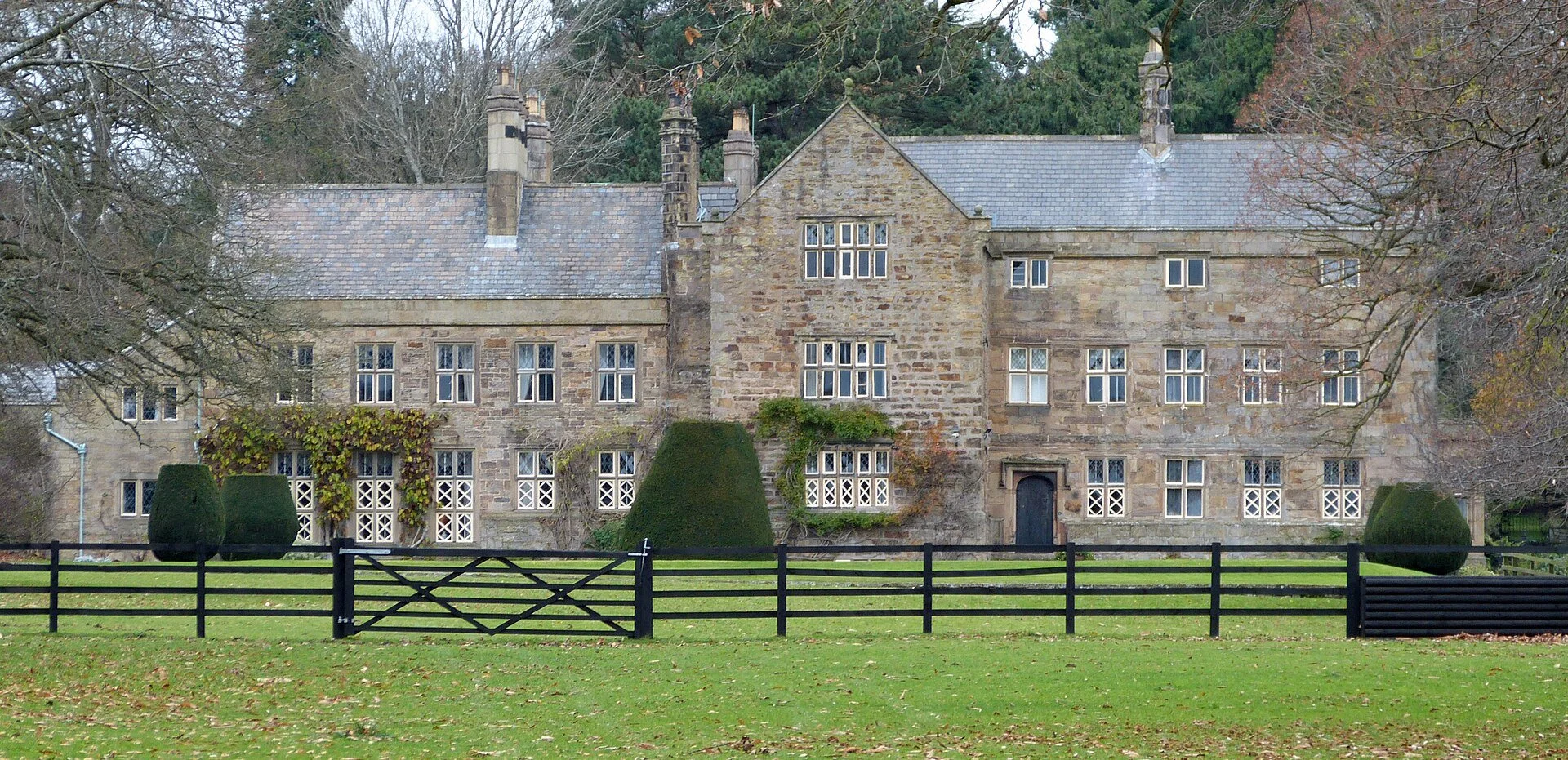
Gwysaney Hall: Home of Welsh Aristocracy
The Davies-Cooke family of Gwysaney represents Welsh aristocracy in its truest sense. Their connection to the land around Gwysaney Hall in Flintshire, North Wales, stretches back to at least the thirteenth century — some seven hundred years of unbroken custodianship.
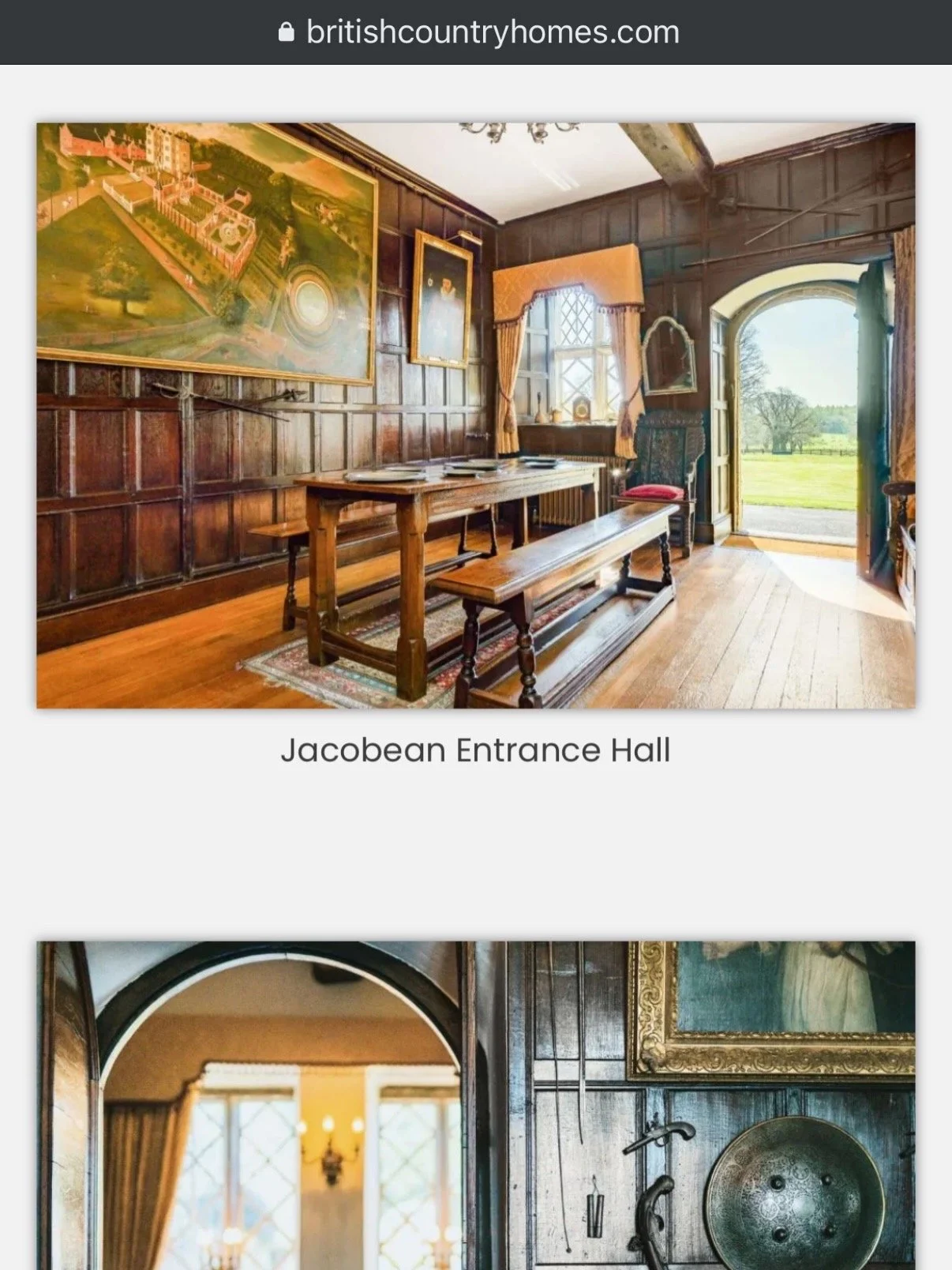
The Hall itself, an understated masterpiece of Jacobean elegance nestled between Mold and Northop, was built around 1603 by Robert Davies, a descendant of Edward III. For over four centuries, it remained in the family, passing from generation to generation, each steward adding a chapter to its story.
And then came the discovery that brought everything together.
I discovered an auction sale of the Davies-Cooke collection, including family possessions — paintings, furniture, the accumulated treasures of half a millennium. Curious, I scrolled through the online catalogue. I couldn’t believe my eyes when I came across a painting of Emma Julia — the mother of the children, the owner of the bracelet I now hold.
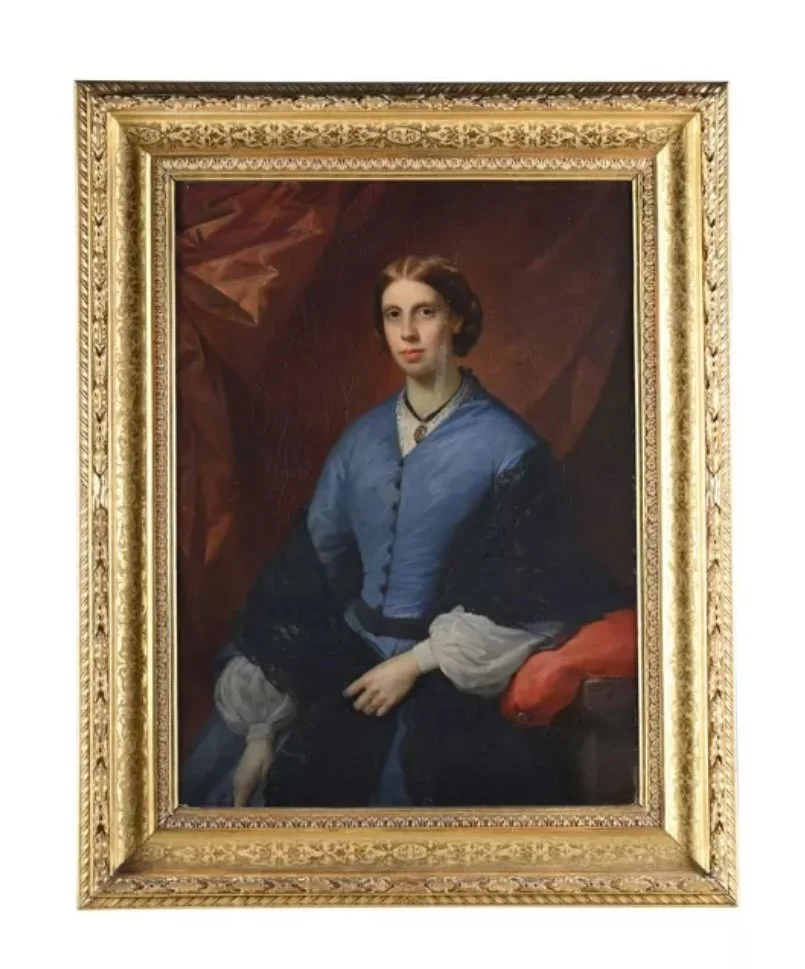
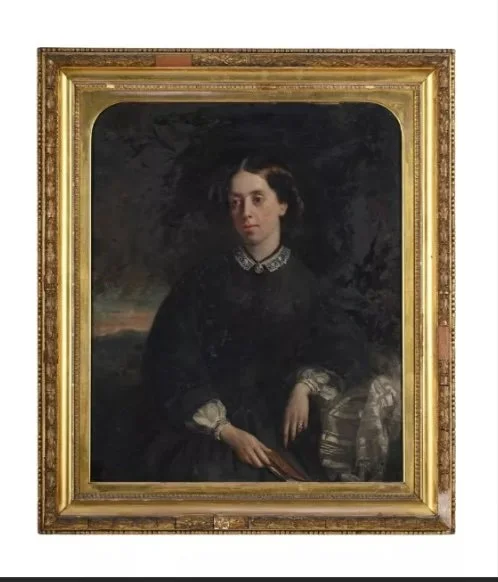
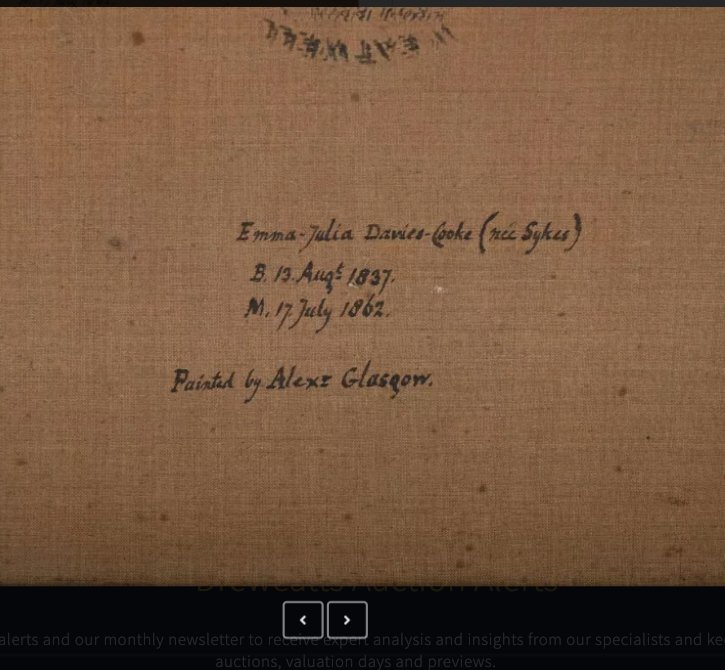

Emma Julia Davies-Cooke, captured in oil by Alexander Glasgow, looks out across a century and a half. Her skin is fine, her dark dress elegant in the Victorian fashion, her gaze indirect, soft, wise. She is young in this painting — a 25-year-old bride. It was painted on 17 July 1862, her wedding day. She holds a book, her index finger tucked inside as a bookmark. On her left hand, I can see a ring — perhaps her wedding ring.
The second painting was made by Cavaliere Alessandro Capalti, signed and dated 1863. Emma is wearing a light blue dress and the same locket around her neck as in the other portrait. She looks directly at the painter, her brown hair shimmering in the light. For some reason, her face looks quite modern to me.
I found so many paintings — of Emma’s husband, son, father-in-law.
I looked at the portraits, then at the bracelet in my hands. Her wrists in the paintings are slender, delicate. The bracelet is too tight for me to wear comfortably. But it would have fitted her perfectly.
Are There Any Living Descendants?
Philip Tatton, the firstborn, was the only one to marry and continue the line. He rose to the rank of Major in the Denbighshire Hussars Yeomanry, served as Vice-Lord-Lieutenant of Flintshire, Justice of the Peace, and High Sheriff of Flintshire in 1915. In 1920, he was appointed an Officer of the Order of the British Empire. He married Doris Donaldson-Hudson in 1894 and lived between Gwysaney, Owston Hall, and Maes Alyn in Mold. When he died in 1946 at eighty-three, he left £65,000 to his son, Philip Ralph Davies-Cooke. He is buried at Saint John the Evangelist in Rhydymwyn, Flintshire.
Of the five blonde-haired children whose locks Emma Julia collected, only one would have children of his own. The line narrowed to a single thread.
There are living descendants today. In 2025, after five hundred years in family hands, Gwysaney Hall was sold. The last custodian, Richard Davies-Cooke, spoke of the decision with characteristic understatement to WalesOnline: “I feel very honoured and privileged to be here, and sad at the same time that it’s on my watch that we’ve had to take this decision, but we need to be sensible and look at the longer-term future for my son and grandson.”
Now that Gwysaney Hall has been sold, it is open to the public. If you are looking for an astonishing place to wed, this might be it.
Pictures: Gwysaney Hall, wikimedia Commons CC BY 2.0, Dreweatts Auction House, Britishcountryhomes
Sources: https://www.walesonline.co.uk/lifestyle/welsh-homes/gallery/i-grew-up-here-child-31540531
http://moldcivicsociety.org.uk/gwysaney-and-the-davies-cooke-family/
www.dreweatts.com/news-videos/gwysaney-hall-a-welsh-family-s-portrait-of-british-history-14767/